
Listening sums
Listen to the teacher read numbers and follow the rhythm to practise calculation.
Programme
Ages 4–15 · 2–8 per class · 2 hours weekly · English & Mandarin
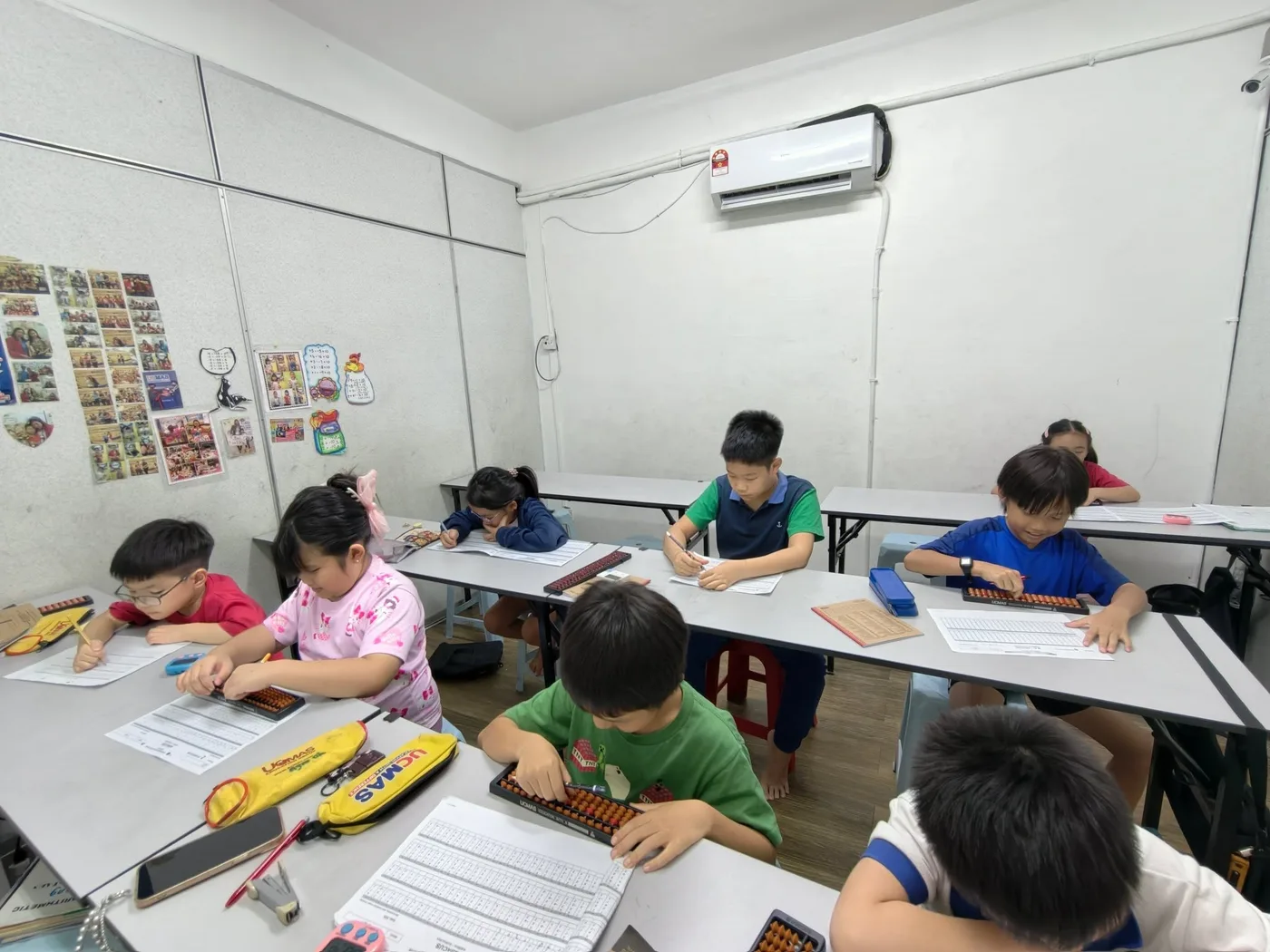
Understand first, then practise
Children first learn place value and how to use an abacus, then gradually practise mental arithmetic. Teachers suggest a starting level suited to each child.
Try the abacus: click a column to change its digit, or use the keyboard's up and down arrows.
Move a bead. Watch the number change.
Click a column to change that digit.
Each upper bead represents five.
More than one way to practise
Listen to the teacher read numbers and follow the rhythm to practise calculation.
Read numbers and questions, then respond using an abacus or mental arithmetic.
Practise observation and recall with briefly displayed numbers.
Join in by reading numbers aloud, responding and practising.
Start with real beads, then gradually picture an abacus in the mind.
Practise following and responding through listening, visual sums and flash cards.
Reach small goals and collect stamps, adding a little motivation to keep trying.
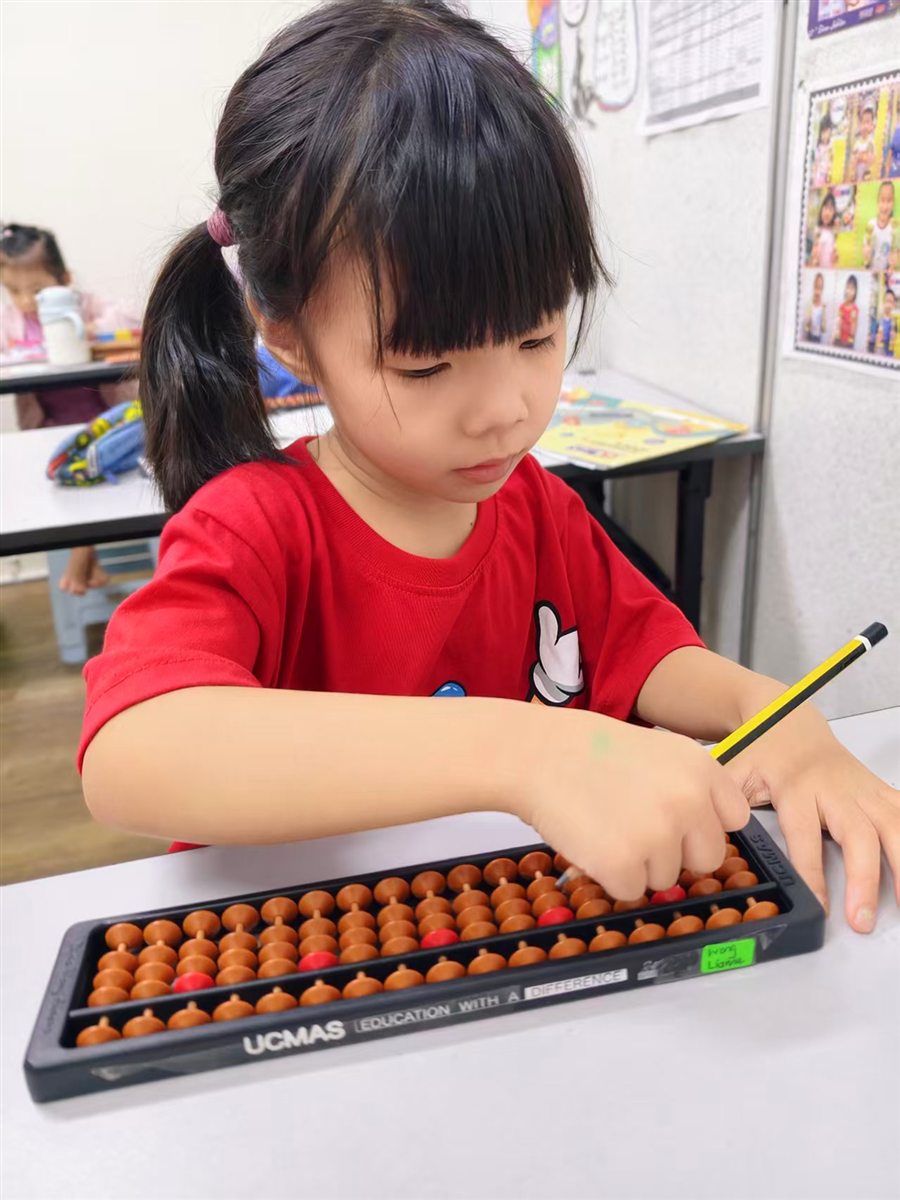
Nurture curiosity and learning habits
The early and primary years offer opportunities to follow instructions, take turns and finish small tasks. Children can try from age 4. Readiness matters as well as age; there is no single age after which learning becomes impossible.
Is your child ready to start? →Questions about maths learning
Abacus learning focuses on representing numbers and practising calculation. School maths also involves concepts, reasoning and word problems. Both can be learnt together, with room for different problem-solving methods.
Lessons offer hands-on practice, listening and visual responses, and regular repetition. Research has found benefits for arithmetic performance, but this does not mean every child will gain higher intelligence or better results in every subject.
Read the three-year randomised study ↗Age-appropriate activities let growing children practise attention, self-control and memory. Curiosity and regular practice matter more than a universal age deadline.
Explore Harvard's child development activity guide ↗Before you enrol
Our Setia Alam centre welcomes children aged 4–15. Talk to us about your child so we can suggest a suitable starting level.
Yes, you can enquire first. We will discuss your child's experience and suggest a suitable starting point.
The trial is free and lasts 30–60 minutes. Parents may observe and materials are provided. Please contact the centre to confirm a time beforehand.
We teach in English and Mandarin. Contact us to ask about classes in your preferred teaching language.
Schedules and fees depend on the learning level and available classes. Ask on WhatsApp for current options. Centre opening hours do not mean a trial is available at every time.
Yes, walk-in enquiries are welcome during opening hours. For a trial lesson, please confirm a time on WhatsApp first.
We teach in classes of 2–8, for 2 hours a week. Ask us about a class suited to your child's starting level.
The centre director may arrange make-up lessons for special holidays as appropriate. Contact the centre to confirm your class arrangements.